

AI designed into the product, not bolted on at the end.
We build software where large language models and agents are part of the core architecture — from the data pipeline to the interface — not a chat widget dropped onto legacy software.
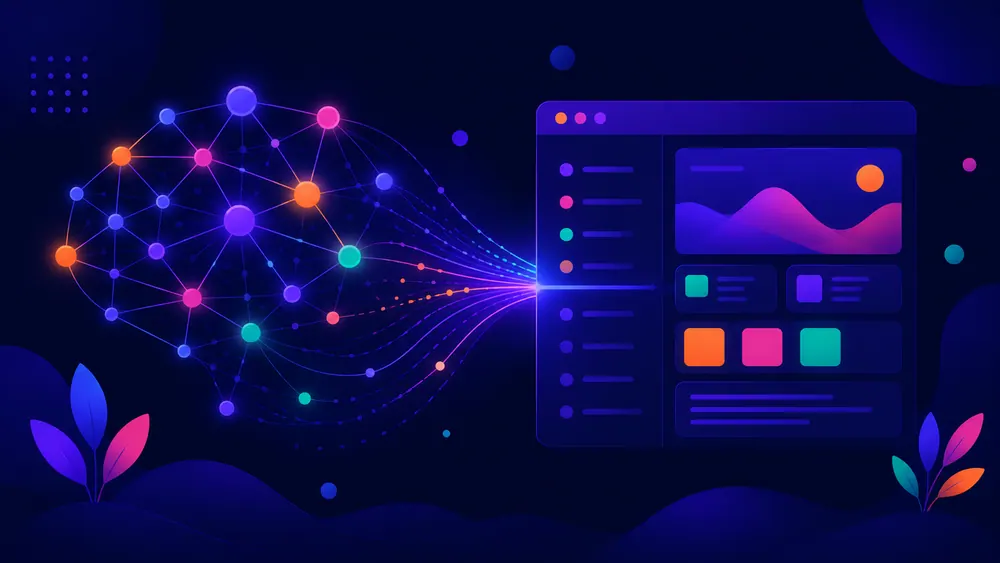
Most "AI features" are a chatbot on top of a static product. We start from the data.
Good AI-native products are built on clean, retrievable data, well-scoped agent permissions, and interfaces that make model output trustworthy and actionable. We design the whole system — model choice, retrieval, guardrails, and UI — as one connected decision.
AI-native development we deliver.
LLM-Powered Product Features
Search, summarization, drafting and copilots embedded directly into your existing product flows.
Retrieval-Augmented Generation
RAG pipelines over your internal documents and data, grounded and auditable.
Agentic Workflows
Multi-step AI agents that complete real tasks — with human approval gates where it matters.
AI Integration into Legacy Systems
Layering AI capabilities onto existing platforms without a costly rebuild.
Internal Copilots
Custom internal tools that give your team an AI assistant fluent in your own data and processes.
Model Evaluation & Guardrails
Evaluation pipelines, prompt testing, and safety guardrails so AI features are production-safe.
Model-agnostic, outcome-focused.
A path from idea to a reliable AI feature.
Use-case scoping and feasibility
Where AI genuinely helps, where it does not, and what success looks like in measurable terms.
Data readiness review
Whether your data is clean, structured and permitted for the job, before anything is built.
A working prototype
A small, testable version with agreed evaluation criteria, so quality is measured, not assumed.
Guardrails and human review
Permission boundaries, approval steps for consequential actions, and logging so decisions are traceable.
Production build
Integration into your product, with fallbacks for when the model is wrong or unavailable.
Monitoring and improvement plan
How quality, cost and drift are tracked after launch.
Questions we hear before a project starts.
Which AI models do you use?
We are model-agnostic and choose for the task, cost, speed and data requirements, including providers such as OpenAI and Anthropic. We can also use smaller, specialised models when they fit better.
How do you protect our data?
We minimise what is sent to any model, sign your NDA, and work within your data policies. Which data may leave your systems is your decision, and we design around it.
What if the AI gives a wrong answer?
It will sometimes. We design for that with review steps, confidence handling, fallbacks and logging, and we test against agreed examples before launch.
Can you add AI to our existing product?
Often, yes, and it is sometimes simpler than rebuilding. Whether to add a feature or redesign around AI is the first question we help you answer.
Do you build chatbots and AI agents?
Yes, with clear permission boundaries and human approval for anything consequential. Our blog post on AI agents versus chatbots explains how we think about it.
How do we start?
A free discovery call to find a first use case worth testing, followed by a small scoped prototype.
Industries we know best